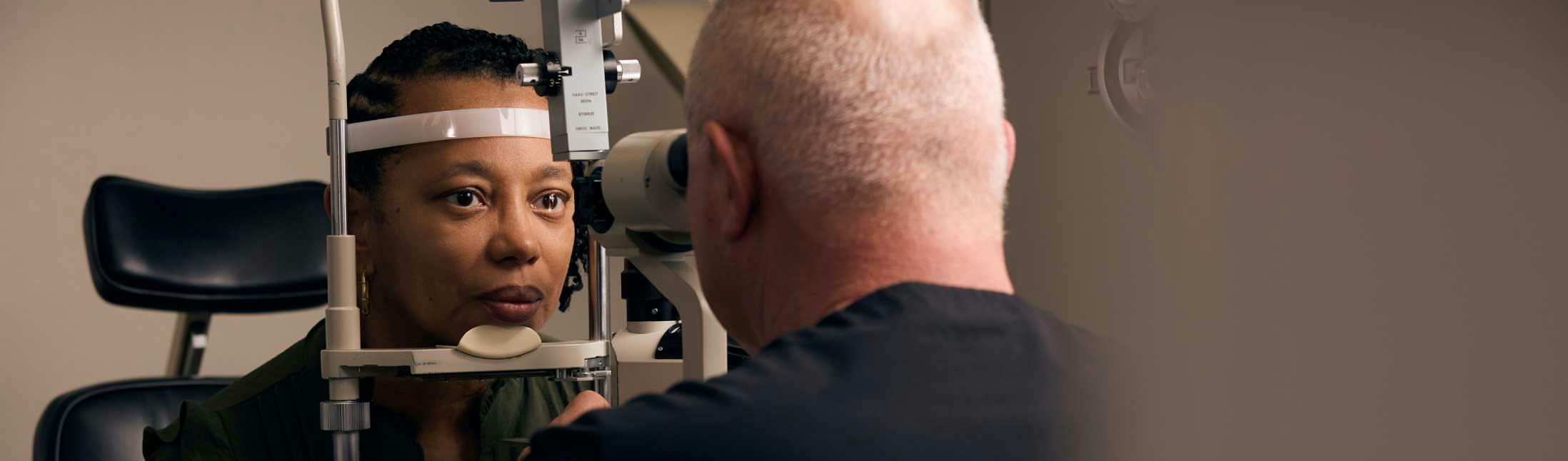
Restoring Alignment Between Both Eyes

Strabismus is a condition in which the eyes don't work together to point in the same direction at the same time. Normally, both eyes move together and send matching images to the brain, but with strabismus, one eye may turn inward, outward, up, or down while the other remains fixed. Ophthalmology Associates diagnoses and treats strabismus for Granbury patients, most often in children, though the condition can occur at any age.

Schedule an evaluation in Granbury if you've noticed your child's eyes drifting or failing to align properly.

Types of Strabismus

  • Esotropia: One or both eyes turn inward, toward the nose.
  • Exotropia: One or both eyes turn outward, away from the nose.
  • Hypertropia and Hypotropia: One eye is misaligned vertically, either turning upward or downward relative to the other.

Banner media
Kid smiling

What Causes Strabismus?

  • Muscle Control Issues: Problems with the muscles or nerves controlling eye movement can prevent both eyes from aligning properly.
  • Refractive Errors: Significant, uncorrected farsightedness in particular can contribute to inward-turning strabismus in children.
  • Family History: Strabismus often runs in families, making genetics a meaningful risk factor.
  • Other Medical Conditions: Certain neurological or developmental conditions can increase the likelihood of strabismus.

Symptoms of Strabismus

  • Visible Eye Misalignment: One eye appears to drift or point in a different direction than the other, sometimes only intermittently.
  • Double Vision: Older children and adults with strabismus may notice overlapping or doubled images.
  • Head Tilting or Turning: A learned habit some patients develop to compensate for misalignment and reduce double vision.
  • Poor Depth Perception: Difficulty judging distances since both eyes aren't working together properly.
  • Squinting in Bright Light: Some patients, particularly with exotropia, squint or close one eye in sunlight.

Request an Appointment

Contact Us
Contact us media

I would like to commend the office employees who assisted me upon arriving at the Ophthalmology Associates in Granbury. During the examination I was impressed by all of the modern instruments used by the assistants and the doctor. I had a very pleasant experience at the doctor's office.

Russell Hayes

How Strabismus Is Diagnosed

A comprehensive eye exam allows your ophthalmologist to observe how the eyes move and align together, both at rest and while tracking an object. Additional testing may be used to measure the degree of misalignment and rule out any underlying refractive or neurological cause contributing to the condition.

Banner media

Treatment Options

  • Corrective Glasses: Can fully or partially correct certain types of strabismus, particularly when uncorrected farsightedness is a contributing factor.
  • Eye Patching: Used when strabismus has led to amblyopia, encouraging the brain to strengthen the weaker eye.
  • Vision Therapy: Structured exercises designed to improve how the eyes work together as a team.
  • Botulinum Toxin Injections: In select cases, temporarily weakening an overactive eye muscle can help realign the eyes.
  • Eye Muscle Surgery: Adjusts the length or position of the eye muscles to improve alignment when other treatments aren't sufficient.
woman smiling | city in the distance | close up of a person's eye

Who Needs to Be Screened for Strabismus?

All children should have their eyes screened for alignment during routine checkups, since strabismus is most commonly diagnosed in early childhood. Children with a family history of strabismus, premature birth, or certain developmental conditions may benefit from earlier or more frequent screening with a pediatric ophthalmologist.

Why Choose Ophthalmology Associates?

Ophthalmology Associates diagnoses and treats strabismus for Granbury patients, led by board-certified, physician-owned ophthalmologists rather than outside investors. We offer the full range of treatment options under one roof, from glasses and vision therapy to surgical correction, tailored to each patient's specific type of misalignment.

Frequently Asked Questions Strabismus

Can strabismus in adults still be treated?

Yes. While it's most commonly diagnosed in children, strabismus that develops or persists into adulthood can often still be improved with glasses, therapy, or surgery.

Yes. Eye muscle surgery is a well-established, commonly performed procedure with a strong safety record, and your surgeon will walk you through exactly what to expect beforehand.

No. Many cases, particularly when caught early, can be managed or fully corrected with glasses, patching, or vision therapy alone, without ever needing surgery.

In some cases, yes, particularly with certain types of strabismus. Ongoing follow-up visits help catch and address any regression early.

"Cross-eyed" is a common, informal term often used to describe esotropia, one specific type of strabismus where the eyes turn inward, but it doesn't capture the full range of strabismus types.

It can affect either. Some patients have one eye that consistently misaligns while the other stays fixed, while others alternate which eye drifts.

textured media

Exceptional Eye Care Starts Here

From routine eye exams to advanced surgical care, our experienced team is here to help you see your best.

Schedule an Appointment
Contact us media
Accessibility: If you are vision-impaired or have some other impairment covered by the Americans with Disabilities Act or a similar law, and you wish to discuss potential accommodations related to using this website, please contact our Accessibility Manager at 817-579-0100.
Contact Us