Clear Vision Starts With an Accurate Diagnosis

A vision disorder refers to any condition that affects how well the eye focuses light, resulting in blurred, strained, or otherwise compromised vision. These conditions are among the most common reasons patients visit an eye doctor, ranging from simple refractive errors to more complex focusing issues. Ophthalmology Associates diagnoses and treats vision disorders for Weatherford patients, matching each one with the correction or treatment that fits their specific prescription and lifestyle, rather than defaulting to a single standard solution for every patient.

Schedule an eye exam in Weatherford to find out exactly what's affecting your vision and how to correct it.

Man smiling

Common Vision Disorders

  • Myopia (Nearsightedness): Distant objects appear blurry while close-up vision remains clear, caused by the eye focusing light in front of the retina rather than directly on it.
  • Hyperopia (Farsightedness): Close-up objects appear blurry, caused by the eye focusing light behind the retina.
  • Astigmatism: An irregularly shaped cornea causes blurred or distorted vision at every distance, often occurring alongside myopia or hyperopia.
  • Presbyopia: An age-related loss of the eye's ability to focus up close, typically becoming noticeable in the early to mid-40s.
  • Color Vision Deficiency: A reduced ability to distinguish between certain colors, most often present from birth.

Symptoms of a Vision Disorder

  • Blurred Vision at Certain Distances: The hallmark symptom, though which distances are affected depends on the specific disorder.
  • Headaches or Eye Strain: Often caused by the eye working harder than it should to compensate for a focusing error.
  • Squinting: A common, unconscious attempt to temporarily sharpen blurred vision.
  • Difficulty With Night Vision: Some refractive errors make low-light and nighttime vision noticeably more difficult.
  • Trouble Distinguishing Colors: A specific sign of color vision deficiency rather than a typical refractive error.
Banner media

How Vision Disorders Are Diagnosed

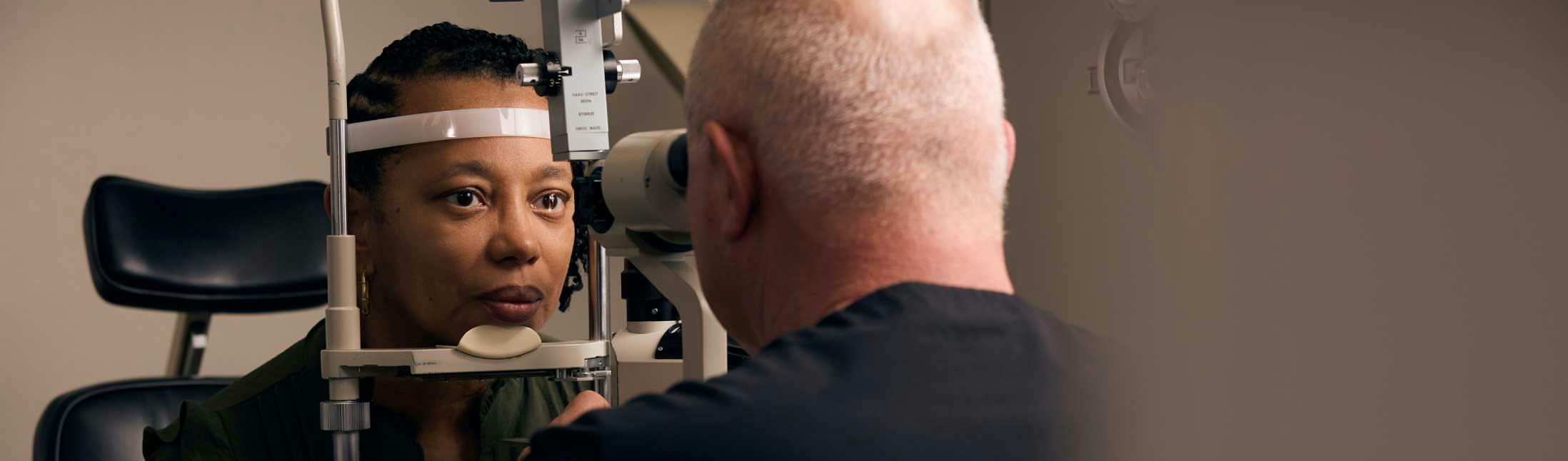
A comprehensive eye exam measures exactly how your eyes focus light, identifying the type and degree of any refractive error present. Additional testing, such as a color vision screening or corneal mapping, may be used when symptoms suggest something beyond a standard refractive issue, helping your ophthalmologist pinpoint the most effective correction.

Request an Appointment

Contact Us
Contact us media

Dr. Nair and his team are very good at explaining everything, doing all the eye tests for cataracts, and giving you options. The whole staff is good. The assistant was very nice and knowledgeable.

Renea Brown

Treatment Options

  • Glasses: The most common and straightforward way to correct nearly any refractive error.
  • Contact Lenses: Offer similar correction to glasses with a different fit and daily routine, including specialty lenses for more complex prescriptions.
  • Refractive Surgery: Procedures like LASIK can permanently correct many refractive errors for patients who qualify.
  • Vision Therapy: A structured program of exercises used for certain focusing or eye-teaming issues that glasses alone can't fully address.
Logo media

Who Should Be Evaluated for a Vision Disorder?

Anyone experiencing blurred vision, frequent headaches, or eye strain should schedule an exam, even if the symptoms seem mild or come and go. Children showing signs of squinting or sitting unusually close to screens should also be evaluated, since undiagnosed vision disorders can affect learning and development well before a child is able to describe what they're experiencing.

Woman smiling | Purple flowers | An eye

How Vision Disorders Change Over Time

Many refractive errors aren't static. Myopia often progresses through childhood and adolescence before stabilizing in early adulthood, while presbyopia develops gradually with age regardless of your prior prescription.

Because these changes can be gradual, regular eye exams help make sure your correction keeps pace with how your vision is actually changing, rather than relying on a prescription that may be years out of date.

Why Choose Ophthalmology Associates?

Ophthalmology Associates diagnoses and treats vision disorders for Weatherford patients, led by board-certified, physician-owned ophthalmologists and optometrists rather than outside investors. We offer the full range of correction options under one roof, from glasses and contacts to surgical solutions, so you get the approach that actually fits your eyes and your life.

Background media

Vision Disorder Treatment Frequently Asked Questions

Can vision disorders get worse over time?

Many refractive errors, particularly in children and young adults, can change gradually over time, which is why regular eye exams are important even for patients already wearing glasses or contacts.

Many are. Conditions like myopia and astigmatism often run in families, making a parent's vision history a useful piece of information during a child's exam.

Yes. Refractive errors are common in children and can affect learning if left uncorrected, which is why routine vision screening is recommended throughout childhood.

Glasses and contacts manage astigmatism day to day, while refractive surgery can permanently correct many cases, depending on the degree and shape of the irregularity.

There's no cure for most forms of color vision deficiency, though certain specialty lenses can help some patients better distinguish between colors in specific situations.

A vision disorder typically affects how the eye focuses light, while an eye disease refers to a condition that damages the eye's structures, such as glaucoma or macular degeneration.

Yes. It's common to have a combination, such as myopia and astigmatism together, or presbyopia layered on top of an existing prescription later in life. Your eye exam accounts for each factor when determining your correction.

textured media

Exceptional Eye Care Starts Here

From routine eye exams to advanced surgical care, our experienced team is here to help you see your best.

Schedule an Appointment
Contact us media
Accessibility: If you are vision-impaired or have some other impairment covered by the Americans with Disabilities Act or a similar law, and you wish to discuss potential accommodations related to using this website, please contact our Accessibility Manager at 817-594-9500.
Contact Us