RLE in Weatherford A Lens-Based Alternative to LASIK

For some patients, correcting vision isn't about reshaping the cornea, it's about replacing the lens itself. Ophthalmology Associates offers RLE to Weatherford patients whose prescriptions or age make LASIK a less predictable option, including those with presbyopia or significant farsightedness. Our surgeons evaluate your eyes, your goals, and your daily routine to determine whether lens replacement is the better long-term path to clearer vision.

Schedule an RLE consultation in Weatherford to see if lens replacement is a better fit than LASIK for your eyes.

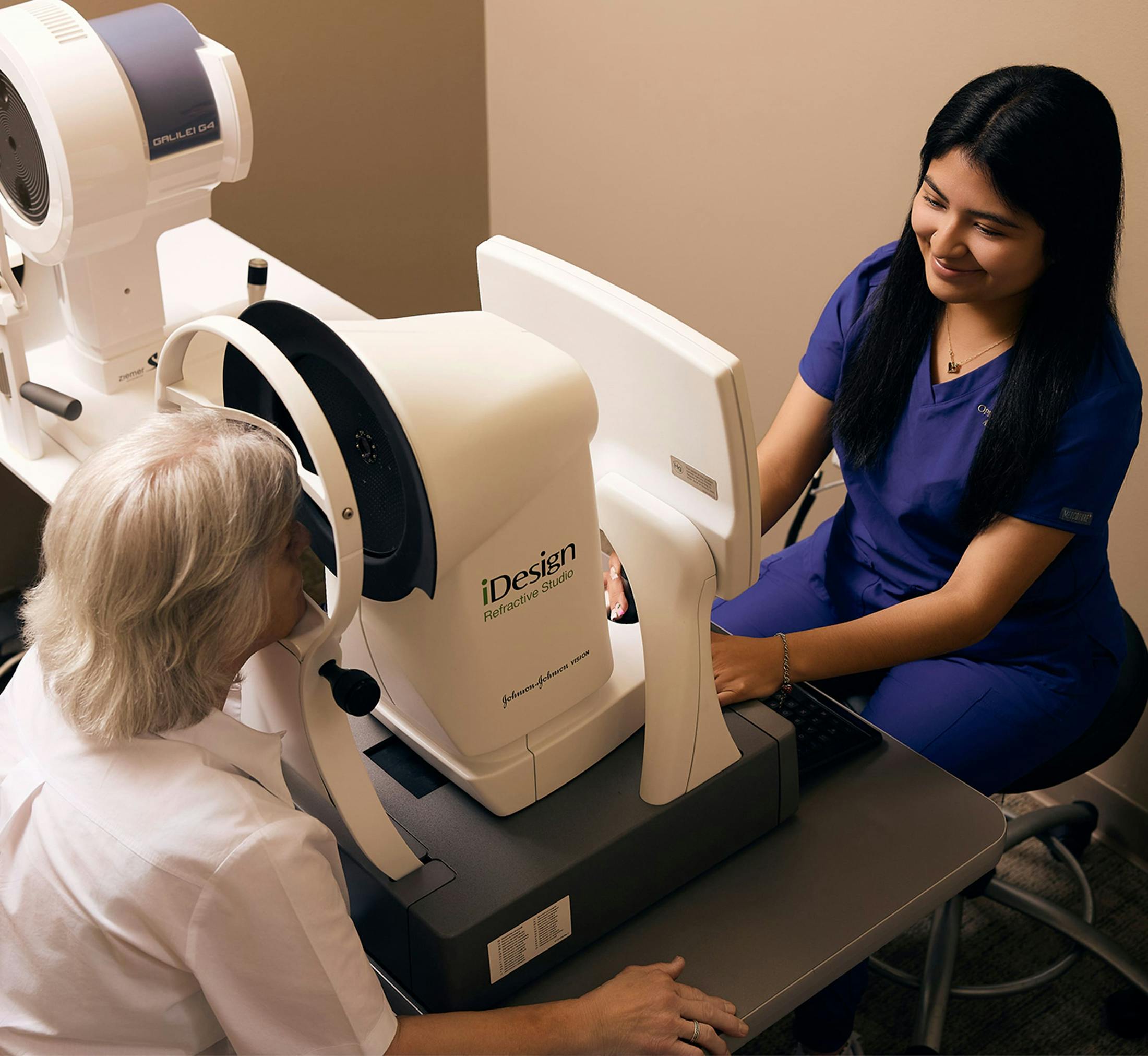
woman and doctor during eye exam

What Is Refractive Lens Exchange?

RLE removes the eye's natural lens and replaces it with an artificial intraocular lens, permanently correcting your prescription. It's essentially the same procedure used in cataract surgery, performed before a cataract ever develops, purely to correct vision rather than to treat clouding.

How RLE Differs From LASIK

LASIK reshapes the cornea to correct how light enters the eye, which works well for many patients but has real limits. It isn't ideal for correcting presbyopia or very high degrees of farsightedness.

RLE sidesteps those limits by addressing the lens directly, which is why it's often recommended for Weatherford patients LASIK can't fully help.

Request an Appointment

Contact Us
Contact us media

This was a follow-up visit, and like my first visit, all went well! Everyone at this office is great to work with and kind. I am 74 years old, and I have worn glasses for all but 8 of those years. Dry eye is my biggest issue, and only Dr. Guardiola has correctly diagnosed my issue and treated it properly! Thank you all very much!

David Freidell

Who's a Good Candidate for RLE?

  • High Hyperopia: Patients with significant farsightedness often see more predictable results from RLE than from LASIK.
  • Presbyopia: Since RLE can include a lens designed for multiple focal distances, it can reduce dependence on reading glasses in a way LASIK cannot.
  • Age Over 45: RLE is most often recommended for patients in this range, when presbyopia and early lens changes tend to begin.
  • Early Lens Changes: Patients showing early signs of lens rigidity may benefit from addressing it proactively rather than waiting.
Logo media

Choosing a Lens for RLE

Because RLE uses the same lens technology as cataract surgery, you'll have the same categories of IOLs to choose from, ranging from standard monofocal lenses to premium options designed to reduce dependence on glasses at more than one distance. Your surgeon will walk you through which lens fits your vision goals during your consultation.

The RLE Procedure

RLE is performed as an outpatient procedure, typically taking less than 30 minutes per eye. Your surgeon removes the natural lens through a small incision and replaces it with your chosen IOL, which settles into place immediately. Most Weatherford patients go home the same day with only minor restrictions.

Recovery After RLE

Recovery from RLE closely mirrors cataract surgery recovery. Most patients notice clearer vision within a day or two, with full stabilization over the following few weeks. You'll use prescription eye drops during healing and attend a few short follow-up visits to confirm your eye is healing as expected.

RLE vs. Cataract Surgery

RLE and cataract surgery use the same core technique and lens technology, but for different reasons. Cataract surgery treats a lens that's already clouded and is typically covered by insurance. RLE is elective, performed on a still-clear lens purely to correct vision, which means it's generally an out-of-pocket procedure.

Woman smiling | Canyons | An eye

Why Choose Ophthalmology Associates?

Ophthalmology Associates has performed lens replacement surgery for Weatherford patients for more than 50 years, guided by board-certified, physician-owned ophthalmologists rather than outside investors. We take an honest, patient-first approach to recommending RLE only when it's genuinely a better option than LASIK, offering the full range of lens technology under one roof.

Background media

Refractive Lens Exchange Frequently Asked Questions

Is refractive lens exchange covered by insurance?

No. Because RLE is elective and performed before a cataract develops, it's typically not covered by insurance or Medicare. Our team can walk you through pricing and financing options.

Yes. The artificial lens placed during RLE is designed to last a lifetime and won't need to be replaced under normal circumstances.

It depends on the lens you choose. A standard monofocal lens usually still requires reading glasses, while certain premium lenses are designed to reduce that need.

No. Since your natural lens has already been removed and replaced, a cataract can never form in that eye.

Most patients experience little to no pain. Numbing drops are used during the procedure, and any post-surgery discomfort is typically mild and short-lived.

The procedure and lens technology are essentially the same. The distinction is timing: RLE is done electively before a cataract forms, while cataract surgery treats a lens that's already clouded.

textured media

Exceptional Eye Care Starts Here

From routine eye exams to advanced surgical care, our experienced team is here to help you see your best.

Schedule an Appointment
Contact us media
Accessibility: If you are vision-impaired or have some other impairment covered by the Americans with Disabilities Act or a similar law, and you wish to discuss potential accommodations related to using this website, please contact our Accessibility Manager at 817-594-9500.
Contact Us