
Pediatric Ophthalmology in Fort Worth, TX
At Ophthalmology Associates, our pediatric ophthalmology program – Ophthalmology Associates for Kids – is dedicated to the diagnosis, treatment, and ongoing management of children’s eye diseases from infancy through adolescence. Led by Dr. Dwayne Roberts, M.D., M.B.A., our team provides specialized pediatric eye care across multiple Fort Worth-area locations. Whether your child has been referred by a pediatrician or you’ve noticed signs of a vision problem yourself, we’re here to help.
Meet Our Pediatric Ophthalmologist – Dr. Dwayne Roberts

Dr. Dwayne Roberts is a fellowship-trained pediatric ophthalmologist with deep expertise in diagnosing and treating the full spectrum of children’s eye conditions. His work spans common refractive errors and amblyopia to complex disorders like strabismus, pediatric glaucoma, and retinal disease. He is committed to providing research-backed, high-quality care to the Fort Worth community and sees patients at our Fort Worth Main, Cityview, HEB, and Weatherford offices.
Conditions We Treat
Our pediatric ophthalmologist evaluates and treats a wide range of eye disorders in infants, children, and adolescents, including:
- Strabismus – crossed eyes, esotropia, exotropia, and adult strabismus
- Amblyopia – lazy eye
- Pediatric cataracts (congenital and acquired)
- Pediatric and congenital glaucoma
- Retinoblastoma
- Retinopathy of prematurity (ROP)
- Nasolacrimal duct obstruction (blocked tear duct)
- Ptosis (droopy eyelid)
- Conjunctivitis (pink eye)
- Corneal abrasions and erosions
- Retinal disease
- Pre-septal and orbital cellulitis
- Glasses prescriptions for children
Understanding Common Pediatric Eye Conditions
What Is Strabismus?
Strabismus is a misalignment of the eyes – one or both eyes may turn inward (esotropia), outward (exotropia), upward, or downward. It’s one of the most common pediatric eye conditions and, if left untreated, can lead to amblyopia. Treatment ranges from corrective lenses and vision therapy to eye muscle surgery performed under general anesthesia.
What Is Amblyopia (Lazy Eye)?
Amblyopia develops when one eye fails to achieve normal visual acuity, often because the brain begins to favor the stronger eye. It typically appears in early childhood and responds best to treatment before age 7, though older children can still benefit. Treatment may involve prescription glasses, patching the dominant eye, or eye drops – all aimed at strengthening the weaker eye.
What to Expect at Your Child’s Appointment
Before the exam, our team will review your child’s medical and family eye health history. Depending on your child’s age and symptoms, the appointment may include:
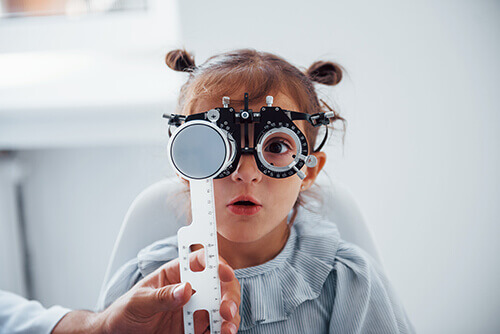
- Visual acuity testing – assessing how clearly your child sees at near and far distances
- Eye alignment assessment – a cover/uncover test to check how the eyes work together
- Refraction testing – identifying nearsightedness, farsightedness, or astigmatism
- Dilated pupillary exam – examining the retina, optic nerve, and overall eye health
- Age-appropriate tests – for infants and young children who cannot read standard eye charts
Dilation drops are commonly used and can cause blurry vision and light sensitivity for several hours. Plan accordingly. The full comprehensive exam typically takes 60–90 minutes.


