Protecting Your Central Vision as You Age

Age-related macular degeneration, or AMD, affects the macula, the small area at the center of the retina responsible for the sharp, detailed vision you rely on for reading, driving, and recognizing faces. It typically develops slowly, often without early symptoms, which makes routine retinal screening an important part of eye care later in life. Ophthalmology Associates monitors and treats AMD across North Texas, helping patients preserve as much central vision as possible for as long as possible.

Schedule a retinal exam to check for early signs of macular degeneration before it affects your vision.

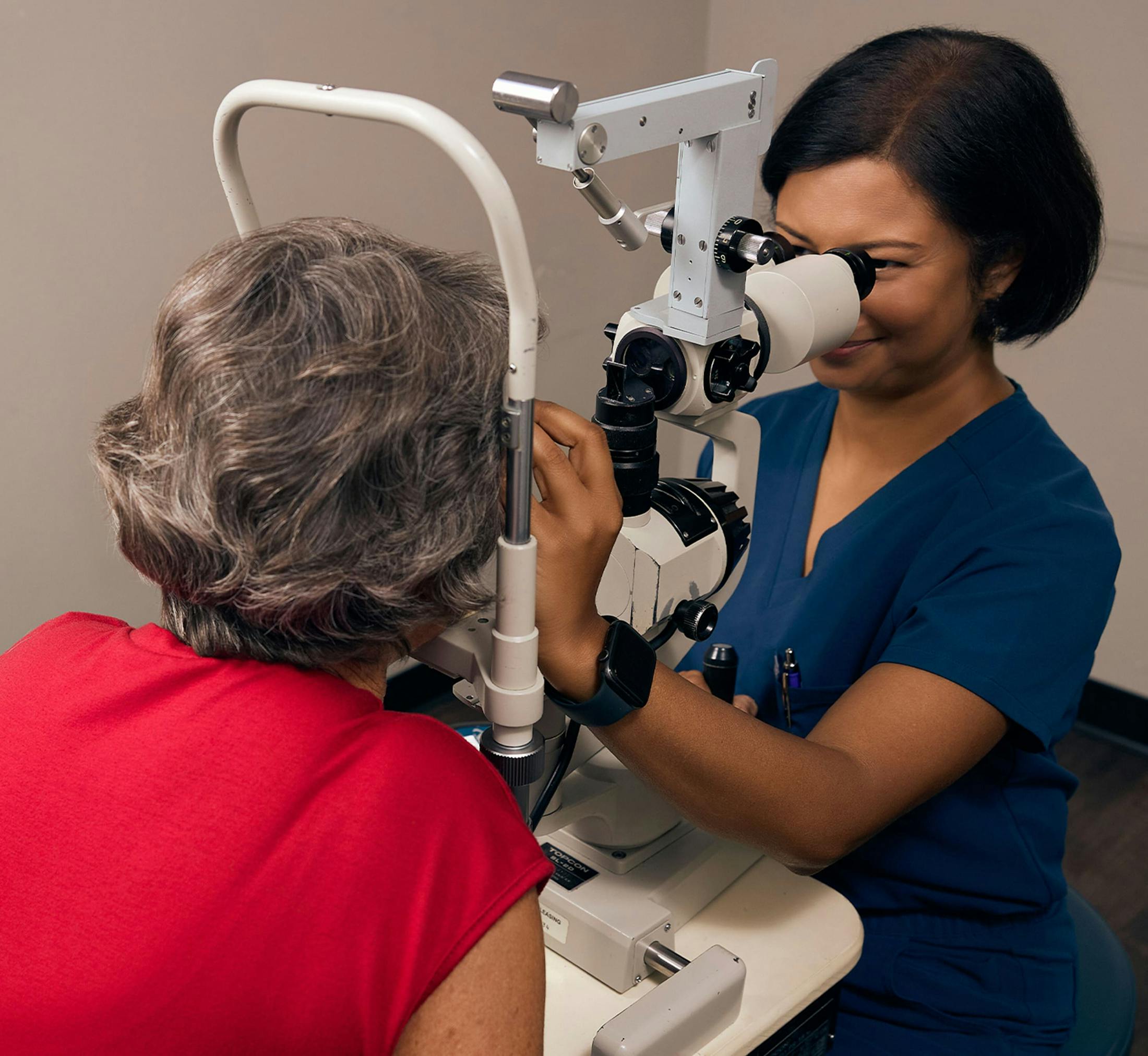
woman and doctor during eye exam

What Is Macular Degeneration?

AMD develops when the macula deteriorates over time, most often as a natural part of aging. Because the macula controls central, detailed vision rather than side vision, AMD rarely causes complete blindness, but it can significantly limit the ability to read, drive, or recognize faces clearly.

Types of Macular Degeneration

Dry AMD

The most common form, developing as the macula thins gradually and small deposits called drusen build up beneath the retina. Dry AMD tends to progress slowly over years.

Wet AMD

A less common but more aggressive form, occurring when abnormal blood vessels grow beneath the retina and leak fluid or blood, causing faster and often more severe vision loss.

Symptoms of Macular Degeneration

Early AMD often causes no noticeable symptoms at all, which is why routine screening matters even before vision changes appear. As it progresses, patients may notice blurry or fuzzy central vision, difficulty adjusting to low light, straight lines appearing wavy or distorted, or a blank or dark spot in the center of their vision.

Request an Appointment

Contact Us
Contact us media

Efficient staff made my visit as easy as possible. Dr Parchue explained everything very clearly. I highly recommend his services.

Katherine Moloney

Who's at Risk for Macular Degeneration?

Risk increases significantly after age 60, and family history plays a meaningful role as well. Smoking, high blood pressure, obesity, and prolonged UV exposure have all been linked to a higher risk of developing AMD, making lifestyle factors an important part of prevention alongside genetics.

How Macular Degeneration Is Diagnosed

A dilated eye exam allows your ophthalmologist to examine the macula directly for early signs of thinning or abnormal blood vessels. Optical coherence tomography, a detailed imaging scan of the retina's layers, can detect changes well before they affect your day-to-day vision. Your doctor may also use an Amsler grid, a simple grid pattern used to check for distortion in your central vision.

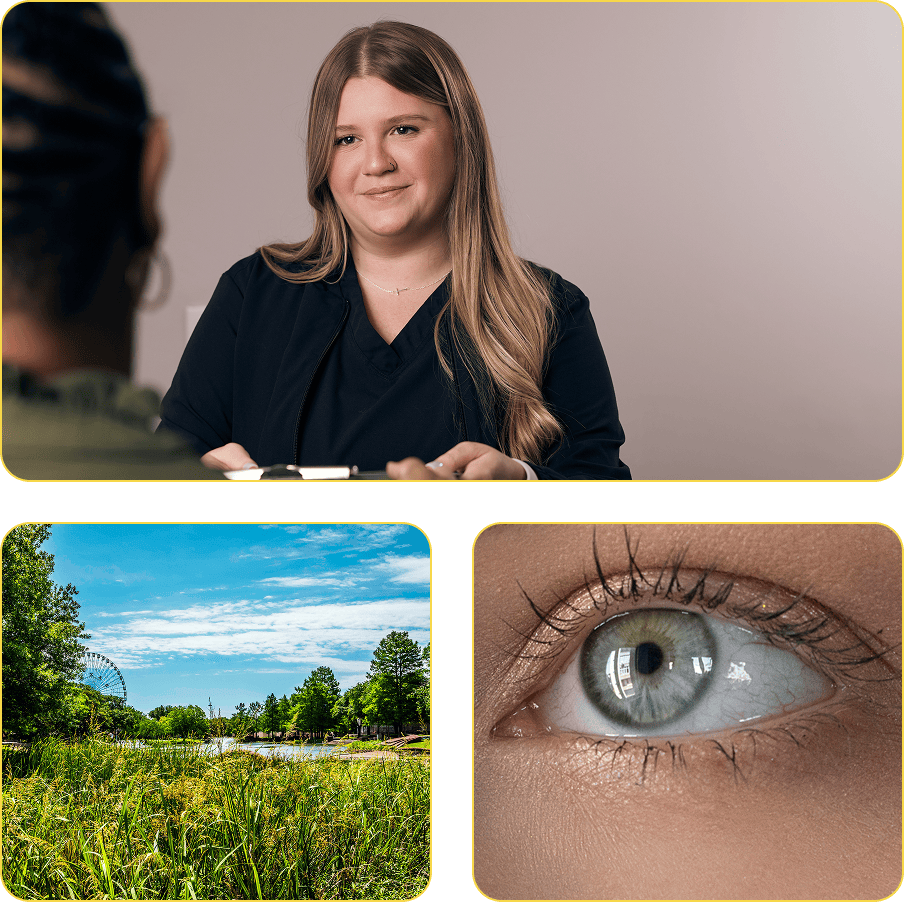
Woman smiling | Grassy field | An eye

Treatment Options

Treatment depends heavily on which type of AMD you have and how advanced it is.

  • Anti-VEGF Injections: The primary treatment for wet AMD, these injections reduce abnormal blood vessel growth and leakage, often preserving or even improving vision when started early.
  • Nutritional Supplements: A specific combination of vitamins and minerals, based on major clinical research, has been shown to slow the progression of certain stages of dry AMD.
  • Lifestyle Modifications: Quitting smoking, managing blood pressure, and protecting your eyes from UV light can all help slow progression, particularly for dry AMD.
  • Low Vision Support: For patients with more advanced vision loss, low vision aids and rehabilitation resources can help maximize the vision that remains.
Banner media

Managing Macular Degeneration Long Term

AMD is a chronic condition that requires ongoing monitoring, even when it's stable. Regular follow-up visits allow your ophthalmologist to track any changes in the macula and catch a shift from dry to wet AMD as early as possible, since early treatment for wet AMD makes a significant difference in preserving vision.

Why Choose Ophthalmology Associates?

Ophthalmology Associates has monitored and treated macular degeneration across North Texas for more than 50 years, led by board-certified, physician-owned retina specialists rather than outside investors. We combine advanced retinal imaging with the latest treatment options under one roof, helping patients protect their central vision for as long as possible.

Background media

Macular Degeneration Frequently Asked Questions

Can macular degeneration be cured?

No. There's currently no cure for AMD, but treatment can slow its progression, and for wet AMD, injections can often preserve or improve vision significantly.

Rarely. AMD affects central vision, but peripheral vision is typically preserved, so complete blindness is uncommon even in advanced cases.

Genetics can play a role, and having a parent or sibling with AMD increases your own risk, which is why family history is part of every evaluation.

Yes. A diet rich in leafy greens and specific nutrients has been associated with a lower risk, and a proven supplement formula can help slow progression in certain stages of dry AMD.

It depends on how advanced your condition is and how it affects your central vision. Your ophthalmologist can help assess whether driving remains safe as your condition is monitored.

No. While AMD becomes more common with age, it's a distinct disease process, not a universal part of aging, and it requires specific monitoring and treatment.

textured media

Exceptional Eye Care Starts Here

From routine eye exams to advanced surgical care, our experienced team is here to help you see your best.

Schedule an Appointment
Contact us media
Accessibility: If you are vision-impaired or have some other impairment covered by the Americans with Disabilities Act or a similar law, and you wish to discuss potential accommodations related to using this website, please contact our Accessibility Manager at (817) 332-2020.
Contact Us