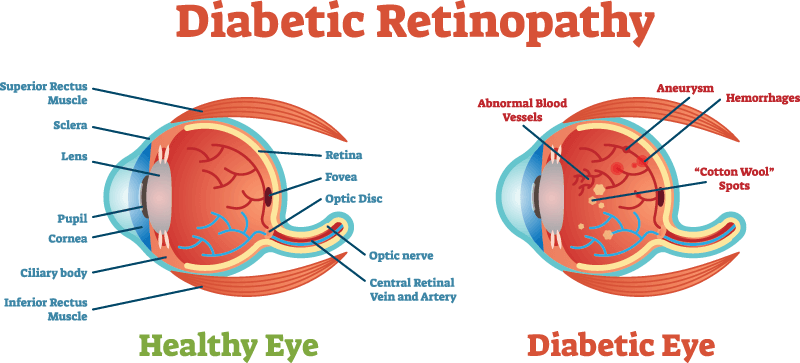
Diabetic retinopathy is a complication of diabetes that weakens the blood vessels that supply nourishment to the retina (the light-sensitive lining in the back of the eye where vision is focused). These weak vessels can leak, swell, or develop new branches, causing a loss of vision. Changes to your vision may not be noticeable at first.

But in its advanced stages, the disease can cause blurred or cloudy vision, floaters, and blind spots – and, eventually, blindness. This damage can be irreversible. Diabetic retinopathy is the most common diabetic eye complication and a leading cause of blindness in American adults. Macular edema, which is leaking fluid that causes blurred vision, often occurs with diabetic retinopathy.
The risk of diabetic retinopathy and its complications is reduced by following your prescribed diet and medications, exercising regularly, controlling your blood pressure, and avoiding alcohol and cigarettes. Regular eye exams are an integral part of making sure your eyes are healthy. Diabetic retinopathy can be detected through a dilated eye exam.
Although all damage caused by diabetic retinopathy cannot be corrected, patients diagnosed with the condition can be treated to slow its progression and prevent further vision loss and reverse some changes. Treatment modalities include laser and surgical procedures.